 Rafly Fernanda
 The Javanese Ramayana dance offers travelers a fascinating way to discover traditional performing arts in Yogyakarta. At Prambanan, the famous Ramayana story becomes a large-scale dance drama that combines movement, costumes, gamelan music, and visual storytelling. The performance connects an ancient epic with Javanese artistic traditions and creates a memorable cultural experience for visitors.
What Is Javanese Ramayana Dance?
The Ramayana Ballet at Prambanan is a dance and drama performance based on the Hindu epic Ramayana. However, the story receives a distinct Javanese interpretation through traditional dance, music, costumes, and stage presentation. The official tourism operator describes it as a dialogue-free performance adapted to Javanese culture.
Instead of relying on spoken conversations between characters, the dancers communicate through choreography, gestures, facial expressions, and body movements. Gamelan music supports the scenes and helps establish the mood. This combination allows audiences to follow the story through visual and musical cues.
The main story follows Rama’s journey to rescue Sita from Rahwana. Important characters such as Lakshmana and Hanuman also appear throughout the performance.
The Javanese Style of the Performance
Javanese dance emphasizes controlled movements, expressive gestures, and careful body positions. These elements give the Ramayana Ballet a different character from modern theatrical productions. The dancers do not simply act out the story. Their movements also communicate emotions, relationships, and changes in the narrative.
Gamelan music adds another important layer. The rhythm can create a calm atmosphere during quieter scenes and become more energetic during battles or dramatic moments. Costumes and stage lighting further strengthen the visual presentation.
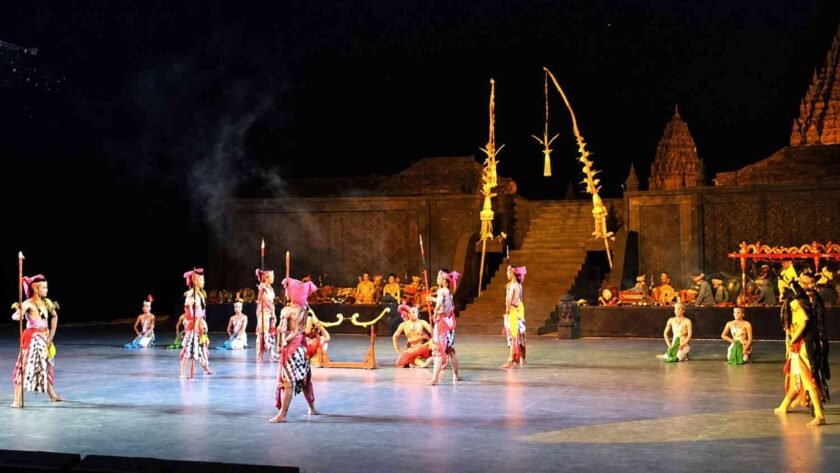
The performance has been presented at Prambanan since 1961, with more than 200 dancers and musicians involved in the production over its history. The open-air version places Prambanan Temple behind the stage, creating a strong connection between the performing arts and the surrounding heritage landscape.
Experiencing the Ramayana at Prambanan
The outdoor setting can make the experience especially distinctive. As the evening begins, stage lighting illuminates the dancers while the temple provides a dramatic background. Visitors can enjoy traditional music and dance while surrounded by one of Java’s best-known cultural landmarks.
The official 2026 schedule lists outdoor Ramayana performances at the Open Air Theatre from May through October on Tuesdays, Thursdays, and Saturdays from 7:30 PM to 9:00 PM. During other periods, the production uses the Trimurti Indoor Stage or Amphi Theatre according to the published schedule.
Travelers who want to understand the characters and storyline before watching the show can explore this complete guide to the Ramayana Ballet in Yogyakarta.
Tips for Watching the Performance
Knowing the basic Ramayana story before arriving can make the performance easier to follow. Since the dancers do not use spoken dialogue, understanding the main characters provides useful context for each scene.
Visitors should also check the latest schedule before traveling because performance dates and venues can change. The official ticket information recommends arriving 30–45 minutes before the scheduled starting time.
For outdoor shows, visitors should also prepare for changing weather conditions. If rain occurs before the performance begins, the production may move to the Trimurti Indoor Theatre.
A Cultural Experience in Yogyakarta
The Javanese Ramayana dance demonstrates how an ancient epic can become part of a living artistic tradition. Through graceful movements, gamelan music, expressive costumes, and dramatic storytelling, the performance introduces visitors to an important part of Javanese culture.
For travelers planning a broader trip, Yogyakarta travel experiences can provide ideas for combining Prambanan with other cultural attractions. Adding the Ramayana Ballet to an itinerary can create an evening that brings together history, traditional art, and the atmosphere of one of Java’s most iconic temple complexes.